Master Thesis & Project
VISUAL ANTHROPOLOGY (M.A.)
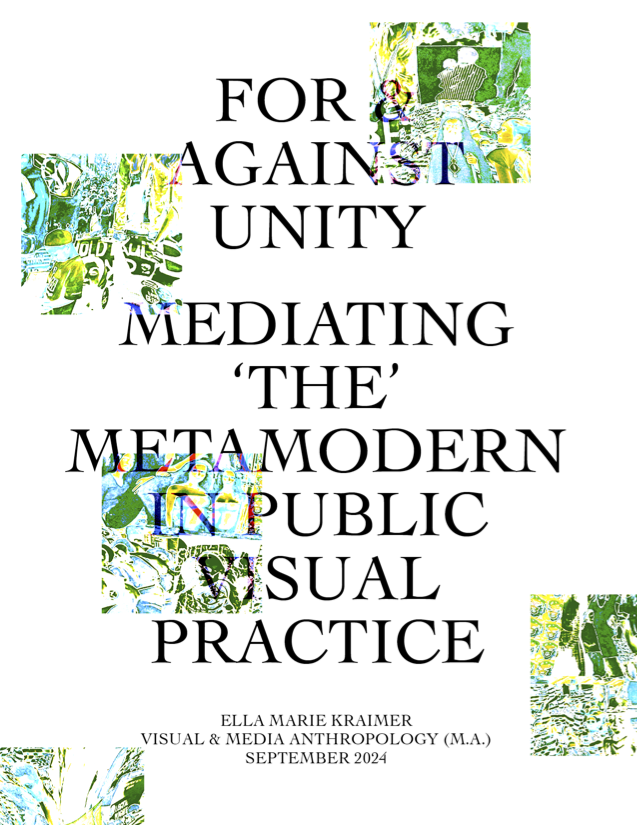
FOR and AGAINST UNITY:
Mediating ‘the’ Metamodern in Public Visual Practice
ABOUT
‘For and Against Unity’ examines the epistemic fragmentation of American society (i.e., progressive social incoherence caused by the fragmentation of knowledge, or what is collectively perceived as ‘truth’) precipitating from the postmodern turn. To appreciate the repercussions of postmodern deconstructionism (i.e., the dominant cultural paradigm of the preceding postmodern age that destabilized collectively agreed-upon frameworks of knowledge and power by revealing their constructed, contingent nature, which contributed to a broader social climate in which coherence, authority, and shared narratives become increasingly difficult to sustain) on the fledgling Metamodern Age, we must look no further than the emergent crisis in public art.
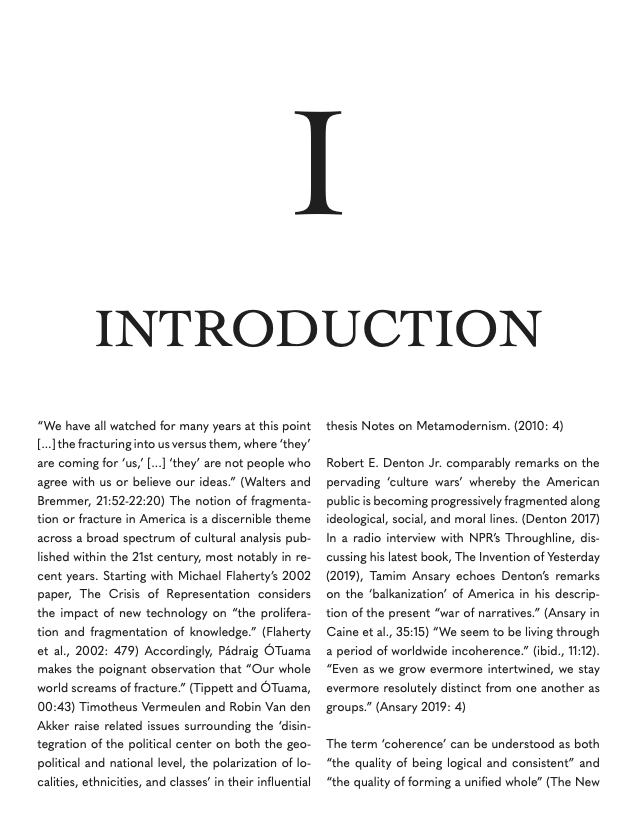
If–by definition art is deemed ‘public’ because it transmits shared narratives and experiences–then we appear to be at a crossroads in public art. In an age where we each curate our own information, and our own reality, the attempt to find common ground has never been more difficult. The recent controversy around public monuments in the United States, and the ultimate removal of hundreds across the nation, speaks to the dissension around who we are as a nation, and to the present re-negotiation of how we represent this cultural identity in the public sphere. This thesis addresses the question of what will succeed these decommissioned monuments to usher in a new age of public art and metamodern visuality, exploring new modalities of representing a public in which constituents do not share an identity so much as a reality.
Fieldwork
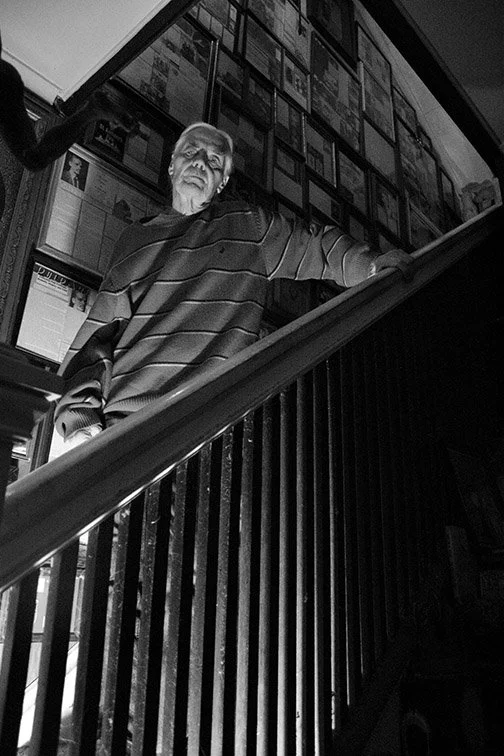
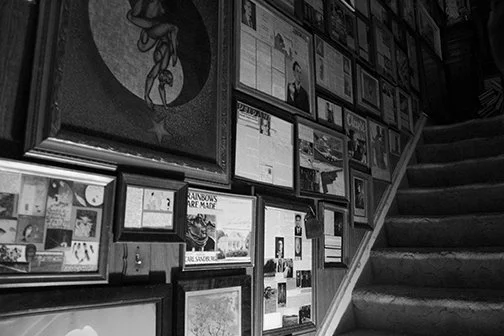
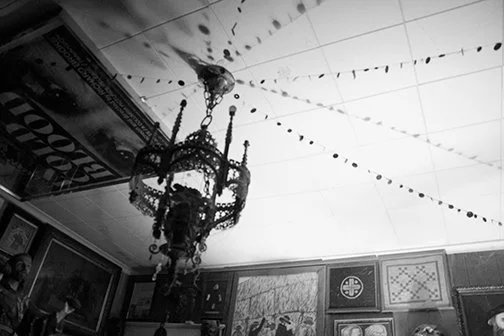
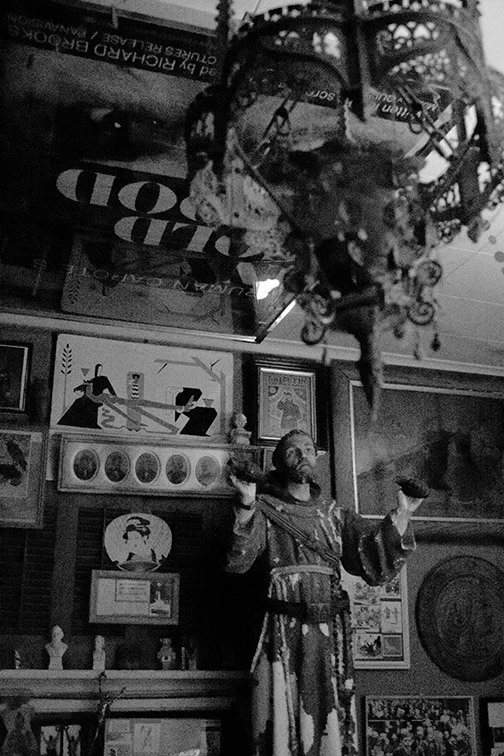
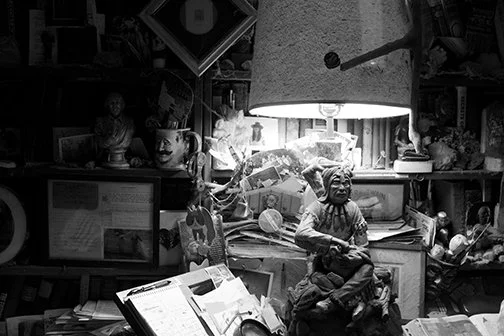
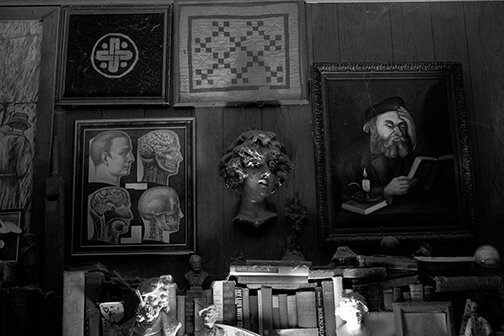
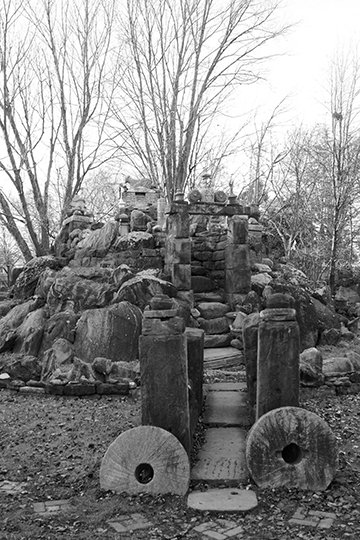
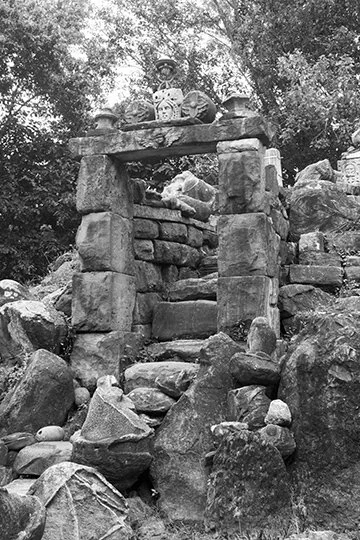
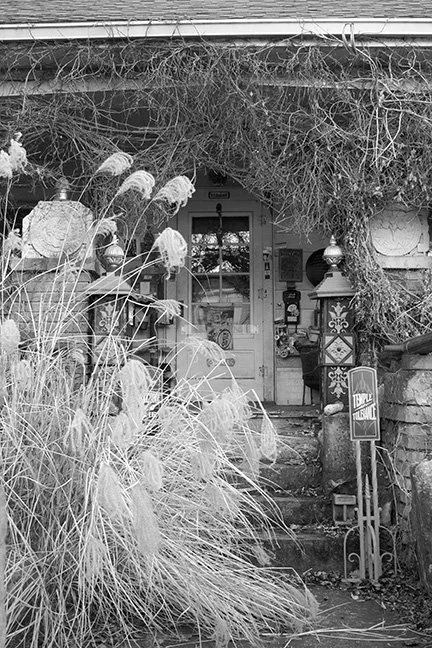
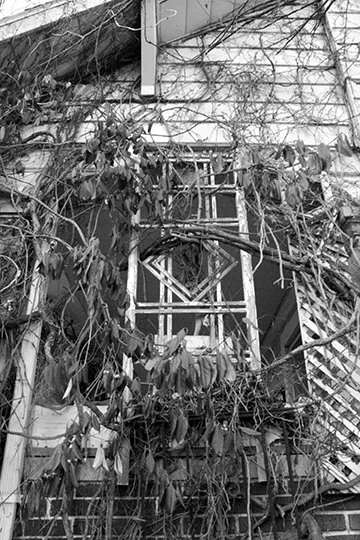
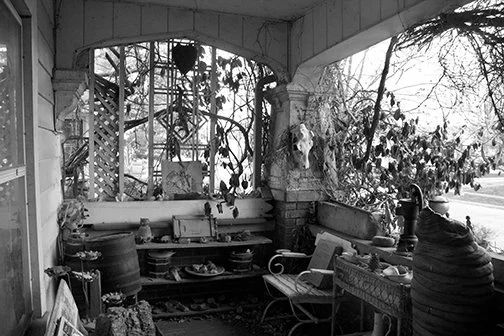
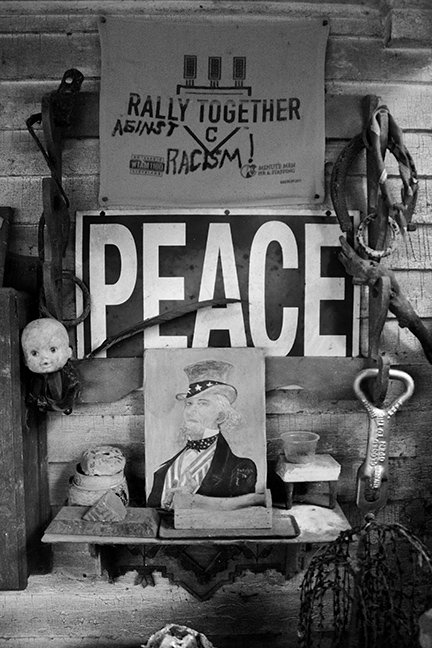
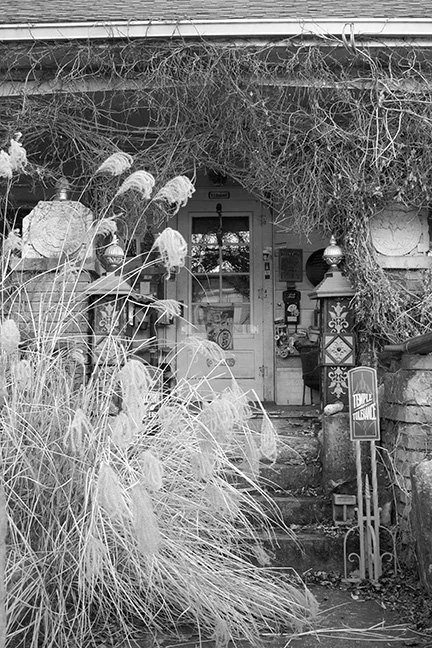
In developing the architecture for an emergent Metamodern aesthetic philosophy, this research uncovers the numerous ways in which the philosophy and methodology of Dada intrinsically align with ‘the’ Metamodern in both theory and practice and further explores the value in implementing a MetaDada paradigm in contemporary public art. This is conducted through thorough survey of how Dadaist principles have been implemented in the design of the Temple of Tolerance–a remarkable public installation in Wapakoneta, OH–which I visit on numerous occasions. During these visits, I transcribed my sensory experience and documented it photographically.conducted through fieldwork and long-form semi-structured interviews with its creator, Jim Bowsher.







Thesis Project
METADADA: An Emergent Aesthetic Philosophy
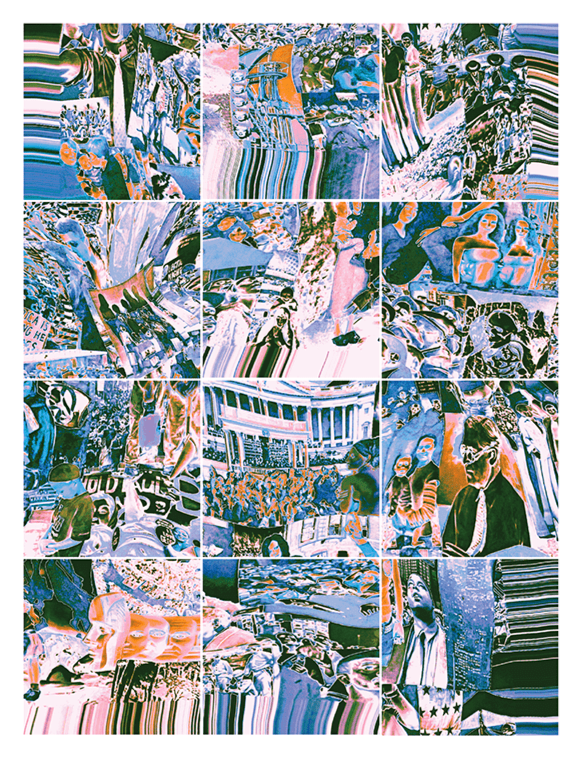
The practical component of my thesis involved the making of a prototype that embodies the emergent aesthetic philosophy proposed in the written research paper reflecting the dynamic, temporal conditions of American sociality in the Metamodern Age through an appropriation and reinterpretation of Dadaist and Neo-Dadaist principles. In a post-truth, post-absurd landscape, the work assembles visual fragments into a single “quilt” that visualizes a contemporary cultural narrative marked by pluralism, plasticity, and hybridity. While this “Metadada” visuality foregrounds difference and discontinuity, it simultaneously seeks to restore a sense of connection and shared meaning.
Using analogue photomontage techniques, I constructed a 48 × 60 inch collage informed by Heiser’s concept of hybridity—drawing on diverse cultural sources to form new syntheses. The collage was then deconstructed into forty individual tiles, digitally manipulated in the spirit of absurdist, “deep-fried” memes, and reconstructed as a single macrocosmic portrait of American pluralism. As the product of both ‘dismantling and deconstruction’ and ‘assimilation and convergence’, the work oscillates aesthetically and conceptually between the poles of modern sobriety, order, and unity and postmodern irony, unreality, and chaos, proposing an aesthetic that is fluid, hybrid and multi-dimensional.
Echoing Dadaist experiments at the Cabaret Voltaire, the quilt expresses an “unreasoned order.” Its layered, multi-perspectival compositions recall De Chirico, Carrà, Schlichter, and Grosz, while its fictitious, uninterpretable narrative mirrors Neo Rauch’s dialectic between old and new, and between reality and unreality.